Pages

Showing posts with label Cycling Tips. Show all posts

Wednesday, 16 May 2018

Stand Pedalling (1st update)


Standing is a cheap and effective way to boost your performance today, for free. Whether you want to climb better on the road or navigate tricky root sections on local trails, you’ll need to get out of the saddle.

Why stand? 

When you ride, you can sit or stand to shift the load to different muscles. When you stand, you can use your body weight to turn the pedals over athletically as you go up and over tough terrain. If you have had to walk up a climb on a road bike or had your front wheel unweight on a steep trail, then it is worth practising standing to give yourself options.

In 2008, Professor Ernst Hansen discovered that road cyclists were better off remaining seated until the gradient hit 10%. From then on standing became more effective in terms of sustained power output, although the riders consumed 5% more oxygen when standing.

During short (less than 30 seconds) all-out bursts, peak power output has been measured at 25% greater when standing compared to sitting, but there is trade off. Research has shown that even at shallower gradients of around 4%, ascending at 19kmh while seated requires 10% less oxygen than when standing. That’s primarily because the body’s centre of mass is supported by the saddle, conserving energy. 

Efficiency, in the sense it is often used is not always desirable. Sometimes it is worth expending more energy for a short period to climb a hill rather than slogging at a low r.p.m. for a longer duration.


How do you stand?

When you stand, your goal is to ride in a straight line as you lean the bike back and forth. As your right foot reaches the bottom of its pedal stroke, you lean the bike to the left, and vice versa. Start off by doing these actions slowly up a gradual climb. Then begin adding speed.

When should you stand?

Bigger riders pay a higher price for elevating their bodies frequently and for extended periods. That may sound like a disadvantage for the big riders, but they typically also have better power seated than smaller riders. While body size will determine how much you stand to a degree, the terrain and event type is a bigger determinant. Smooth and high-speed criterium races require aerodynamics and, ideally, efficiency through smooth cornering. But you need to get out of the saddle to attack, stay on wheels and sprint.

Mountain bikers are in and out of their saddles constantly to be efficient and to let their bikes roll over terrain. Generally, fitter riders can stand more. For long rides or efforts, you’ll want to sit more and save standing for getting up steep sections or keeping the cranks turning as you start to fatigue. Often, road riders will sit and grind at cadences lower than 50 r.p.m. or even walk up steep grades rather than standing and shifting their weight side to side to essentially “walk on the bike.”

Source:
Canadian cycling June-july 2017
http://www.cyclist.co.uk/tutorials/183/should-you-sit-or-stand-when-climbing


Ride On!


Tuesday, 15 May 2018

Bidon For Tools


Why?
  • Aesthetic look..if you hate to see bags hanging around on your bike
  • Save the nature...you can do it if you re-use your "beaten" bidon for tools pack
  • Watertight/proof Packs for cheap...even a cheapest waterproof bags in the market can't beat the price of regular bidon
But...

You will hate it if you only had one/two bottle cage when you need to carry two bottle of water. Don't worry, you can put your bidon for tools in rear jersey pockets, it's still better than stuff it a tools separate in your back pocket.

DIY bidon for tools

Source:
https://www.lifehacker.com.au/2013/07/build-a-bike-sized-toolkit-out-of-water-bottles/
http://www.hargrovescycles.co.uk/bianchi-tool-case-67789.html


Ride On!


Wednesday, 5 July 2017

Did Lighter Bikes Make You Faster?

Bicycle

How much does your bike weigh? Chances are you’ve got a pretty good idea. You may have even bought it on the strength of how light it is, and have spent a good deal of money bringing this figure down even further. Good. How about your coefficient-of-drag area (cdA)? Good chance you can't answer that.

Let’s clear something up. There is no such thing as a “fast bike.” Bikes are neither fast nor slow. Bikes are shiny or expensive. Bikes have a lot of mass or a little. Without a rider, they are stationary. Physics holds a bike in place until you get on it and start pedaling. Even then the bike may not necessarily be fast. Of all the equipment on your bike, your legs are the most critical component. There are plenty of nice bikes on the road that are being ridden slowly.

Jim Gourley, a triathlete with an aerospace engineering degree from the U.S. Air Force Academy, tackles this topic in his book Faster: Demystifying the Science of Triathlon Speed. He did the math to see just how much speed a cyclist can save with a lighter bike. For starters, he estimates that switching from an entry-level road or hybrid bike with an aluminum frame to a top-of-the-line carbon racing bike with the lightest components on the market can save you about three pounds. Then he calculates how long it will take a cyclist riding four different bikes—15-, 16-, 17-, and 18-pounds—to get up a mile-long hill.

Even at the steepest grade he tested (7 percent), a one-pound difference between bikes only saves about 2.5 seconds—and the lightest bike only reaches the top 7.5 seconds faster than the heaviest one. "Over the course of an hours-long race, a few seconds per climb is not a significant advantage," he writes, at least not to an amateur cyclist or age-group triathlete.

One reason bike weight doesn't matter much is because it's only part of the total weight you're carrying, says Jim Martin, PhD, associate professor of exercise and sport science at the University of Utah. "It's easy to look at a 20-pound bike and a 15-pound bike and say, 'Wow, I'm saving 25 percent!'" he says. "But it's really just five pounds off your bike weight plus your own body weight plus your clothing, your water bottles, your gel, everything you've got on the bike. So it ends up being a much smaller percentage than it seems."


The Effects of Body Weight

A much more efficient—and economical—way to lighten your load is to shed body weight, says Gourley, not bike weight. Not only will it reduce your overall weight by a larger percentage, but it will also increase your VO2 max, which can automatically give you more power.

The heavier a rider is, the greater his energy requirements will be. This translates into putting in extra effort, especially during a climb. On rolling terrain and steep climbs, a lighter rider will come out ahead. The heavier rider will have less of an advantage because he will also have to overcome more gravitational forces. 

Bicycling Magazine published the results of a study from James C. Martin, Ph.D., assistant professor in the department of exercise and sport science at the University of Utah. Using the calculations from a 160-lb. rider on a 5 kilometer, 7 percent grade, he concluded that for every 5 lbs. added to a rider, it would take him an additional 30 seconds to ascend a steep climb.

If you really want to upgrade your current ride without spending a lot of cash, there is one thing you should focus on: aerodynamics. "There's a saying in the cycling community that aero trumps weight, and I agree completely with that," says Martin. "If you can reduce your frontal area by 10 percent, you'll also reduce drag by that much," he says.

This holds true no matter what speed you ride, he adds. "There's this pervasive notion that aerodynamics doesn't matter if you ride below a certain speed, like 18 or 20 miles an hour. But the irony is that it can matter even more to slower riders, because they're out on the course that much longer." Reducing drag by 10 percent on a 90-minute 40K ride can save nine minutes, he explains; for someone who does it in 50 minutes, it only saves five.


Conclusion

Q: So, did lighter bikes make you faster?

A: Not as much as you think

Shave your body weight first 
before 
shave your bike weight 
(and your saving money)


Source:
https://www.outsideonline.com
http://www.velonews.com
http://www.livestrong.com
cyling weekly magazine April 2017


Ride On!


Friday, 19 May 2017

Don't Ride Without It: Water


Either you ride for century, bikepacking, touring or just rush on the street, water its one of absolutely list things to carry. You may experience loose of drink water in the middle of the ride without any shop or house on your sight. How you survive? Why water its important? How to manage your water in the middle of nowhere? Here's a few things to consider: 

Humans can go without water for only a few days. High and low temperatures, a lack of shade, dry or windy conditions, and other factors can further reduce the amount of liquid reserves left in the body and dramatically reduce the time available for waterless survival. When too much salt is in your system, water is leached from individual cells to compensate for and correct the imbalance. The body fights this by urinating to remove the salt, so we urinate more water than we drink. The result is dehydration.

The body compensates for the fluid loss by increasing the heart rate and constricting blood vessels to maintain blood pressure and flow to vital organs. Eventually, you’ll feel nausea, weakness and delirium. As you become more dehydrated, the brain and other organs receive less blood, which leads to coma, organ failure and eventually death.

Prevent Dehydration

Even when you are not thirsty, drink small amounts of water at regular intervals to prevent dehydration. Rinse your mouth for 30 seconds before swallowing. Most of your thirst comes from a dry mouth. regular intervals helps your body remain cool and decreases sweating. When bundled up during cold weather you may be unaware that you are losing body moisture. You must drink water to replace this lost fluid. Your need for water is as great in a cold environment as it is in a hot environment.


Over-hydration

Over-hydration can occur if total water intake exceeds what your kidneys and sweat glands can process. A rule of thumb is that consumption that exceeds 1.5 liters per hour can result in over-hydration. Over-hydration can cause low serum sodium levels resulting in cerebral and pulmonary edema, and, possibly, death. 


Finding Water

If you bikecamp in wilderness, animals can often lead you to water. Grazing animals, such as deer, are usually never far from water and typically drink at dawn and dusk. Birds can sometimes lead you to water. When they fly straight and low, they are heading for water. When returning from water, they are full and will fly from tree to tree, resting frequently. 

Insects, especially bees, can be good indicators of water. Bees seldom range more than a few miles from their nests or hives. They will usually have a water source close by. Ants need water as well. A column of ants marching up a tree is likely going to a source of water. A good source of water is dew. By stretching out a sheet of plastic you can capture dew during the night.

If you find a muddy area, there may be groundwater available. Dig a hole about a foot deep and one foot in diameter and wait. You may be surprised to find that the hole is soon filled with water. This groundwater will be muddy, but straining it through some cloth will clean it up, and it will get you by in the short term.

Vegetation helps supply you with water as well. Fruits, coconuts, cacti, vines, palm trees and bamboo can be good sources of liquid sustenance. Bend the top of a green bamboo tree down about a foot off the ground and tie it off. Cut a few inches off the tip, put a container underneath and leave it overnight. The next day, you should have a nice amount of clear, drinkable water.


Last...

Riding without bring a water just stupid. Never put yourself in situation to find a water, plan your route wisely and that's mean including where to find water and food supply.


Source:
American Survival Guide magazine, spring 2017
http://adventure.howstuffworks.com


Ride On!


Thursday, 18 May 2017

Review: Sleek Baby Diaper Rash Cream

After a few short ride, its time to tell you the result using Sleek Baby Diaper Rash Cream as substitute of chamois cream. First, i applied the cream in my skin, not in chamois pad. Second, during the test, i only used a road BIB/short and used XC and road bike. The course was vary, from beaten road to good surface road. 


So what the results?

1. After applied in my skin, it felt natural like lot of sweat concentrate in one place, sleek but almost odorless

2. During the test, i don't have allergic or rash issue

3. It help prevent my crotch from scratch because countless friction between my skin, pads, pants and saddle when cycling

4. It doesn't help protect my bum from impact, i still felt sore when seated across the beaten road.

5. After washed the shorts/BIB, i didn't see any stain in the pads, neither in my saddle's too

tested

Conclusion

Sleek Baby Diaper Rash Cream it work (for me) as a substitute of chamois cream. With price around Rp 30.000 for 80 ml its bang for the bucks and the tube design make us can carry the cream in back pocket.

Bear in your mind, if you wanna try it, i didn't responsible for any result you have.


Ride On!


Sunday, 7 May 2017

First Look: Sleek Baby Diaper Rash Cream


Okay, the title seems awkward in this blog, but...if you read my previous post "In Search: Chamois Cream Substitute" you will know this article still relate with cycling :). After a few medical shop sight seeing and asked, i found this diaper rash cream in one of mini market, wkwkwkkw.

The tube contain 80ml of cream and the price only around Rp 30.000 (CMIIW). Why i choose this product? 

1. The smell is good for myself
2. Cheap (FYI, there's a same product with different brand cheaper than this)
3. I kinda like the colour scheme of the tube, white and purple :D
4. If i'm satisfied with it, i can easily find it

The feature of this product is "...specially formulated with natural anti-Irritant, moisturizer, and antibacterial with pH 5.5..."  Ok, i found 2 point i needed from this cream, anti irritant and moisturizer. I will do couple ride with it and tell you the result.

Stay Tune.


Ride On!


Thursday, 4 May 2017

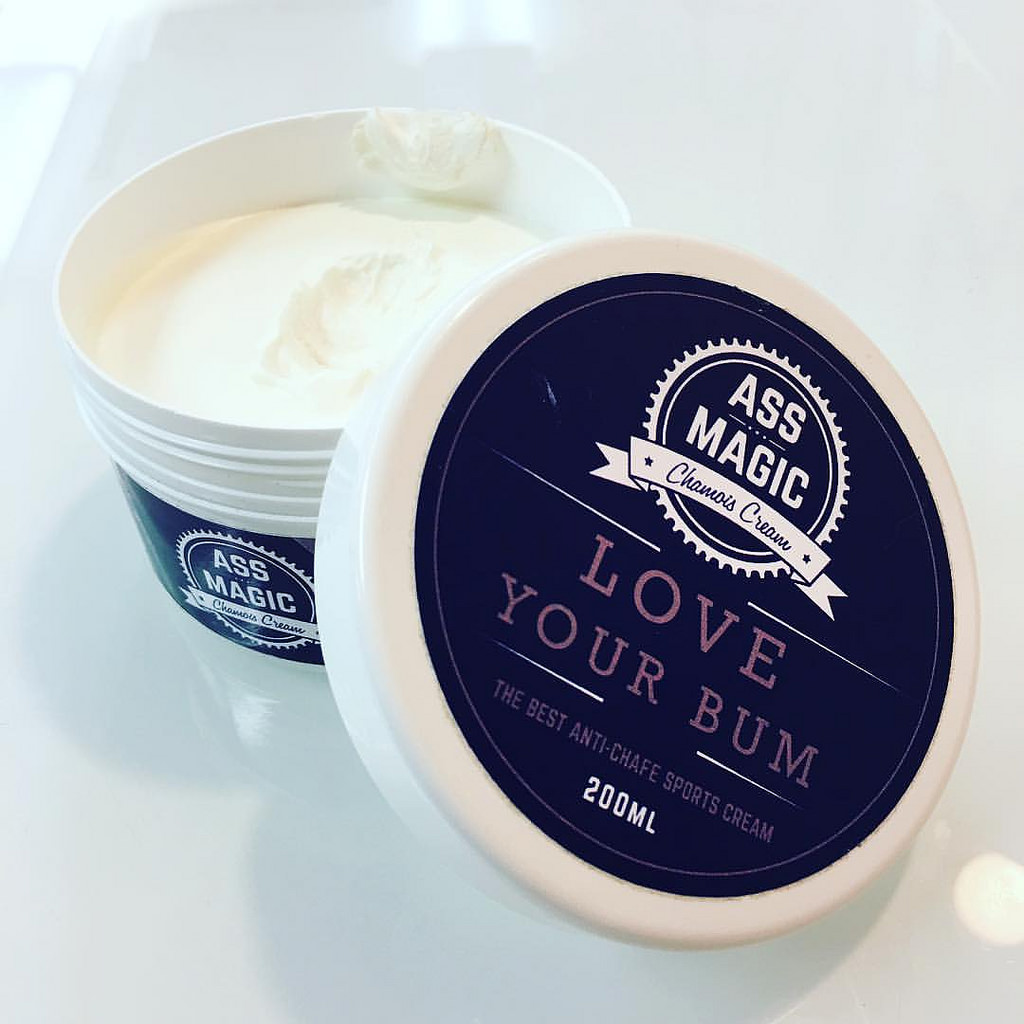
In Search: Chamois Cream Substitute


Sometimes, ergonomic saddle and good padding pant doesn't protect your crotch from blister, especially if you ride century or tour. Some people i know can enjoy a hundred km ride without blister crotch just using a regular short, Unfortunately, i'm not the one of them. 

So, after a countless ride and countless blister in my crocth, i have a will to try using chamois cream. after a few clicks, i think again, again, and again..to buy that cream. Why? The problem was their price. I found their price start from Rp 200.000 for 100ml tube. Wow! It just need a few ride before the tube run dry, hiks...

So...chamois cream stay in wish list for now. I started google it to found chamois cream substitute. Generally, netizen say you can substitute chamois cream with:

1. Vaseline
2. Diaper rash cream
3. Coconut oil

There's plenty of option, and they are all cheaper than chamois cream! So its time to try that things. Stay tune for the result.


Ride On!


Sunday, 9 April 2017

Legal Dope: Caffeine


Caffeine is one of the few legal ergogenic aids that has substantial evidence behind it. So, how do you use it to get the most out of your legs when you’re on the road/trails? What is caffeine? Caffeine is a stimulant naturally found in the leaves, nuts and seeds of plants. You’ll find it not only in tea and coffee, but also in cola and energy drinks and also increasingly in sports supplements such as gels, sports drinks and now even chewing gum.

Matthew Ganio, PhD, an exercise physiologist at the Institute for Exercise and Environmental Medicine in Dallas. "Caffeine crowds out a calming brain chemical called adenosine," he says. You become more alert, you react faster, and you don't feel like you're working as hard, all of which add up to training or competing at a higher intensity for a longer period of time and being more agile in a pack

The beauty of using caffeine for performance comes from research that shows it can be helpful for a wide range of sports from high intensity, short duration sprints all the way to endurance events. So, no matter if you’re riding or running, caffeine may be helpful. 

Don’t get too excited just yet… Whilst caffeine does offer benefits to performance, in many people the side effects can mean that caffeine isn’t the right choice. If you’ve ever accidentally had one coffee too many, you’ll probably know what these side effects are already. Common issues from too much caffeine include increased heart rate, shakiness, anxiety, sleep disturbances and gut upsets.

Ganio suggests testing what caffeine does to you during hard sessions. "If you feel jittery, anxious, or notice your heart racing, dial back the amount you take in before a ride," says Ganio. "If you can't find a caffeine level that leaves you feeling comfortable, skip it. Side effects can impair performance."


How should I use it?


It’s not just as simple as drinking an espresso shot before jumping on your bike or running. Typically, a dose of around 1-3mg caffeine per kilogram of body weight is now recommended. At this dosage studies have shown an improvement in performance of about 3% (although individual responses do vary). So, a 70kg cyclist is looking at ingesting 70-210mg of caffeine. It’s important to work out what dosage works for you and it can be a bit of a balancing act finding the dose that will give you the performance benefits, without the side effects. 

You also need to consider when to take caffeine - it may be before or during your session (or a combination of both) that helps you to perform at your best. Caffeine is absorbed quickly and reaches peak concentration within about an hour of ingestion. Traditionally, recommendations have therefore been to take 1-3mg caffeine per kilogram of body weight about 60 minutes before your race starts. If using caffeine during your race, 1-2mg per kilogram of body weight has been shown to improve performance. 

How and when you do this will depend on your tolerance and your need for it. There is no right way to take caffeine - many protocols have been tested and all seem to show similar benefits. For example studies have looked at taking multiple smaller doses versus one or two larger doses (all giving the same amount of caffeine) and all showed approximately 3% increase in performance.


Tips for using caffeine

1.Practice your plan in training first. As always, it’s best to try a range of protocols in training and see what works best for you

2.For shorter events: dose up on caffeine before your event to get the maximum effect. You may want to use caffeinated gum to do this rather than knocking back multiple espressos. 

3.For longer events like an enduro, aim to maximise your caffeine later in the race when you’re starting to get tired, helping you post good times on the final stages. Taking a caffeinated gel, gum or electrolyte tab throughout the race will be a good way to do this. 

4.If you get nervous before a race, caffeine will make this worse! If it’s a longer event, take your caffeine throughout the race when you’re a little more relaxed instead of taking a large dose just before you start


Source:
Australian Mountain Bike magazine issue 159
www.bicycling.com


Ride On!


Psssttt...if you like motorcycle too, visit my other blog at 

Friday, 31 March 2017

What Is A Good Bicycle?


Maybe you read in magazine the roadbike A better than roadbike B, or you hear your friends say "i have a good time in bicycle C..frame was stiff  bla, bla, bla..." But, the classic problem will appears, if that thing work for them, did it work good for you too?

In a good bike, design, materials, and construction are well-balanced and suit the intended purpose and cost of the machine. An ultra-light, aerodynamic time-trial bike made for the Tour de France and built of advanced composite materials, and a crude cargo bike made for hauling bananas to market in Nicaragua and built of crude mild steel, can both be good machines.

Low cost is essential. For the Tour contender, exotic design, space-age materials, and high-tech construction; for the banana-carrier, a simple design, easily-worked mild steel, and rudimentary joinery. A good bike is honest. It does the job it sets out to do, is made with good and efficient use of materials, and will stand up.


To put it complicated (:D hahahahaha) a good bicycle its depends on:

1. Frame material and design
2. Suspension or vertical compliance
3. Wheels
4. Transmission
5. Brakes
6. Handlebars, stem and saddle

But i don't talk about that now.

Whatever the pedigree, whatever the job, good bikes are well found and well-executed. A bicycle is a vehicle for you, and while it is important to give any new bike a fair trial and strive to learn how to get the best out of it, you do the work and the riding, and you either get results, or you don't. Ride, and the difference between an honest bike made to do the best it can, and one that is badly built or only a marketing idea, will usually become apparent. 

Last....

A good bike is one you like because it works for you.


Ride On!


Saturday, 5 November 2016

Exercise Induced Asthma


Exercise induced asthma (EIA) is an obstructive airway disease that results in a reduced expiratory airflow during or following exercise. Most people with chronic asthma experience symptoms of asthma during exercise. However, there are many people without chronic asthma who develop symptoms only during exercise. There are a number of triggers that cause EIA such as breathing large volumes of air, dry air, cold air, high pollen count, pollution, presence of chest infection, dust and a chlorine environment such as indoor swimming pool.

When we who are susceptible to EIA, exercise in the presence of these triggers we initiate an inflammatory response that leads to a constriction of the smooth muscle that surrounds the airway. This constriction of airway smooth muscle and inflammation narrows the airway so that airway resistance is increased and expiratory airflow is decreased. Typically this happens most often after short, hard intense exercise but can occur during an endurance race. 

Endurance athletes are more susceptible to EIA than the general population because of the sustained high ventilatory demands of training and competition. During intense training and competition we breathe large quantities of air through our mouth, which requires the lower airways in our lungs to warm, humidify and filter the air. In susceptible individuals this causes an inflammatory process, which leads to the constriction of smooth muscle around the lower airway.


Although symptoms are a poor predictor of EIA, some athletes may experience coughing, expiratory wheeze, excess mucus production, chest tightness and difficulty in breathing. Many athletes may not recognise these symptoms and put a post training cough or tight chest down to simply training hard. Using the symptoms alone to diagnose EIA results in 50 per cent of athletes being misdiagnosed.

A secure diagnosis of EIA should involve an objective airway challenge that demonstrates the presence of an airway obstruction and the reversibility of the obstruction when treated with an inhaler such as salbutamol. Although GP practices can conduct assessments for asthma many practices do not offer assessments for EIA. You may have to ask to be referred to a specialist respiratory consultant in order to gain access to a suitable test.

Before you go to doctor, you may try to spot the difference between EIA and Dysfunctional breathing.

Exercise induced asthma
  • Can limit exercise performance but narrowing of the airways typically occurs 5-10 minutes after exercise
  • Wheeze on breathing out
  • Fall in lung function post exercise
  • Sound is primarily from the chest
  • Symptoms relieved after inhalation of reliever inhalers
Dysfunctional breathing
  • Occurs during intense exercise and resolves within 5 minutes of stopping exercise
  • Wheeze on breathing in
  • No fall in lung function post exercise
  • Sound originates in the neck Symptoms remain after inhalation of reliever inhaler
Prevent The EIA

Asthma inhalers or bronchodilators used prior to exercise can control and prevent exercise-induced asthma symptoms. The preferred asthma medications are short-acting beta-2 agonists such as albuterol. Taken 10 minutes before exercise, these medications can prevent the airways from contracting and help control exercise-induced asthma.

Another asthma treatment that may be useful when taken before exercise is inhaled cromolyn sodium, such as Intal or Tilade,15 to 20 minutes before exercise. Having good control of asthma in general will also help prevent exercise-induced symptoms. Medications that may be part of routine asthma management include inhaled corticosteroids such as Qvar or Pulmicort.

An inhaled long-acting beta-2 agonist combined with a corticosteroid, such as Advair or Symbicort, may be added to the treatment regimen. In addition to taking medications, warming up prior to exercising and cooling down after exercise can help in asthma prevention. For those with allergies and asthma, exercise should be limited during high pollen days or when temperatures are extremely low and air pollution levels are high.


Source:
http://www.webmd.com/asthma/guide/exercise-induced-asthma?page=2
Triathlon Plus, Winter 2016


Ride On!


Saturday, 29 October 2016

(Don't) Be Like A Pro


Pro cyclist taught as many ways to build, maintain and boost our cycling performance. We can admire and imitating their discipline, race strategy or the way of their life, from nothing to something. But, there's certain parts of their job we should think twice before imitating.

1. Extreme Technique

Crouching low on the top-tube, and pedalling it looked extreme. Whether it was, as Froome claimed, a “spur of the moment thing” or an act of extreme calculation conceived aboard Team Sky’s ‘Death Star’ coach, it was something that even he suggested should be left to the pros. “Please don’t try this at home #safetyfirst,” Froome tweeted, though he swiftly undermined that by retweeting a video of a six-year-old doing just that…

Transferring your weight to the front of the bike destabilises you and heightens the risks of falling should you hit a pothole or stone. Descending off mountains has enough inherent risks without adding more to the pot. Never be afraid to have fun on your bike but be aware of the variables that professional riders are able to control. They have the whole road to play with, a high level of confidence that motor vehicles won’t get in the way and they may well have extensively recced the stretch of road they attempt the risky maneuver on.

2. Being A Weight Weenie

Saving grams anywhere they can is an obsession for some riders: see the way Alberto Contador has changed his bike before the final climb of a stage for a bike with tyres so fine and light that they’ll only be used once. Do the pros take it too far? Perhaps, but why they go to such lengths is because they’ve nothing to spare from their bodies. Ben Wilson, a coach for personalbestcycling.co.uk says: “People often go for the easy buy rather than take the time to learn the skills that will make their hobby more fun or safer. It’s a shortcut to lose weight from the bike by spending money, rather than lose it from yourself.”

3. Tubs

‘Tubs’ are the tyre of choice for the pros; they’re a lighter overall package have a reduced chance of puncturing and they allow cyclists to continue if they do flat. Tricky to fit, even trickier to repair, tubs also depend heavily on the skills of the mechanic fitting them. A bad glue job can lead to a tyre rolling off the rim, with predictably catastrophic results. With the cons heavily outweighing the benefits, tubulars are totally impractical for everyday use. Even pros will train on clinchers and, in time trials at least, some are now using them in competition.

4. Riding Through Injury


In the crazy world of pro racing, where contracts are short and careers forever on a knife-edge, riding through injury is an occupational hazard. It can almost be excused if the injury happens during a big stage race. But if the rider is going through a season from race to race, with persistent injury, it’s a recipe for disaster. As amateurs, we should give ourselves much more slack than professionals get. We cycle for enjoyment and if an injury is impeding that, we need to rest up and come back when we’re fit and healthy. If we’re injured or come down with illness during or just prior to our big season goal, it’s worth testing the water to see if you can continue. If you can’t, fine – you can stop without regret.

5. Full Carbon Wheels

All pros run these, no matter the conditions or terrain, but we should think twice. Carbon wheels, depth for depth, are lighter than alloy rims but their braking ability in the wet plummets – and while pros are skilful enough to overcome this, we might not be. “In events in the mountains, a solid, reliable set of wheels is better than a lightweight set that might not last the duration of your trip,” says Ben Wilson. Full carbon wheels can also be tricky to maintain, particularly when spokes break, and although the technology has come on in recent years, the heat build-up in the rims from braking can deform the wheel. However, this is only a problem when you use rim brakes – disc brakes are hugely improved performers in the wet. They’ll prolong the life of your wheel, and perhaps do the same for you too.

6. Training for hours and hours

Pros train all day everyday because they race ridiculously long distances that we will never race and only a few will ever ride. Us amateurs don’t have all day to train, as family, jobs, university or school all get in the way. Mostly we can only race in the evening or at weekends, and then only if it doesn’t clash with so and so’s wedding, or birthday party, or the kids shopping session. Do yourself a favour: forget high mileage and get a turbo trainer; use it all year round to supplement your real riding. Concentrate on quality not quantity as cycle races are not won by those who can cycle the furthest, but those who can cycle a set distance the fastest. Train for the amount of time that matches your races. If your races last 2 hours, train to ride fast for 2 hours, not steady for 4 hours.


Not every parts suit your needs and not every technique safe for yourself. 

Remember, we (I) cycling for health and happiness, not for living.


Source:
Cycling Plus, November 2016
http://britishcyclesport.com/2013/training/stop-trying-to-ride-like-a-pro/


Ride On!


Tuesday, 13 September 2016

Sleep Better, Ride Faster (1st update)


Why is sleep so important to us? Sleep is the body’s way of shutting down, so that it can recharge and recuperate for the following day. In fact, it’s a biological necessity; without sleep, the body is unable to function at all. Devoting a large enough proportion of your day to sleep is always worth it; these hours are not wasted time. If you train regularly, you need more sleep than the average person. Research from Stanford University has shown that athletes who try to get 10 hours of sleepper night improve their performance. This isn’t surprising given that sleep deprivation has been shown to have a negative impact on concentration, mood and alertness, while long-term sleep loss is associated with diabetes, stroke and heart disease. Inadequate sleep doesn’t just mean you’ll stay still and not make progress, but in fact could potentially move you backwards as your body (and mind) becomes overloaded. As a result, your immune system can become compromised, and muscles and tendons more susceptible to pulls, strains and tears, as well as the risk of burnout increasing, too.

Without enough sleep, your body doesn’t have the capacity to fully recover from the stresses you placed on it during a training session, meaning you don’t reap the rewards from the hard work you put in on the bike. In the worst case scenario, your body degrades rather than getting stronger. Sleeping badly for one night is not a serious risk to performance and health, but insufficient sleepover the long term must be avoided at all costs. 

Nick Littlehales (sportsleepcoach. com) helps athletes improve their sleep by redefining their approach to it. “Maintaining consistent and sustainable levels of recovery does not just happen naturally. Every athlete has to adopt a redefined approach to sleep, not just take it for granted,” he says. Not sleeping well can become a vicious cycle, adds Littlehales: “Not being able to recover well builds fatigue that requires over-stimulating to push through the next day, which in turn leads to erratic sleep patterns and in time the onset of insomnia.” 

Donnie Campbell (ultrarunning) knows that losing out on sleep can affect his performance: “There are times when I’m so busy with work and with life that sleep is reduced. It has a major impact on my training as I struggle to get in quality sessions when tired and I also feel it takes me longer to recover after a hard session.” Campbell’s fellow international ultrarunner Dr Andrew Murray – Sports Medicine Specialist at the University of Edinburgh – believes that while getting the training right for any event is crucial, adequate sleep, and proper nutrition rank next in importance: “Research from the University of Calgary shows that those sleeping well in the build-up to an event perform better, and we know from a medical perspective that those sleeping at least seven hours a night have a lower risk of illness. This is backed up,” adds Murray.

The effects of long-term sleep deprivation encompass a broad spectrum, he says: “A negative mindset kicks in from the moment you wake if you are not feeling refreshed. Mood, motivation and confidence are low. The consequences are anxiety, stress, anger, poor relationship management and depression. This can lead to the regular use of sleeping tablets and high caffeine intake—adding to the issues rather than resolving them.” There are certainly steps you can take to improve your sleep, but improvements cannot be found overnight. Committing to a consistent ‘sleep hygiene’ routine, ensuring you’re not over training or over-stressed in general and ensuring you have a good diet all help ensure you sleep well and recover from training.


How to sleep better

1. Support your body's natural rhythms

Getting in sync with your body’s natural sleep-wake cycle, or circadian rhythm, is one of the most important strategies for sleeping better. If you keep a regular sleep-wake schedule you’ll feel much more refreshed and energized than if you sleep the same number of hours at different times, even if you only alter your sleep schedule by an hour or two. Try to go to sleep and get up at the same time every day. This helps set your body’s internal clock and optimize the quality of your sleep. If you’re getting enough sleep, you should wake up naturally without an alarm. If you need an alarm clock, you may need an earlier bedtime.

2: Control your exposure to light

Melatonin is a naturally occurring hormone controlled by light exposure that helps regulate your sleep-wake cycle. Your brain secretes more melatonin when it’s dark—making you sleepy—and less when it’s light—making you more alert. Avoid bright screens within 1-2 hours of your bedtime. The blue light emitted by your phone, tablet, computer, or TV is especially disruptive. You can minimize the impact by using devices with smaller screens, turning the brightness down, or using light-altering software such as flux. When it’s time to sleep, make sure the room is dark. Use heavy curtains or shades to block light from windows, or try a sleep mask.

3: Get regular exercise

Regular exercisers sleep better and feel less sleepy during the day. Regular exercise also improves the symptoms of insomnia and sleep apnea and increases the amount of time you spend in the deep, restorative stages of sleep. If you can't ride everyday, do some light exercise like walking etc. It can take several months of regular activity before you experience the full sleep-promoting effects. So be patient and focus on building an exercise habit that sticks.

4: Be smart about what you eat and drink

Your daytime eating habits play a role in how well you sleep, especially in the hours before bedtime. Limit caffeine and nicotine. You might be surprised to know that caffeine can cause sleep problems up to ten to twelve hours after drinking it! Similarly, smoking is another stimulant that can disrupt your sleep, especially if you smoke close to bedtime. Avoid big meals at night. Try to make dinner time earlier in the evening, and avoid heavy, rich foods within two hours of bed. Spicy or acidic foods can cause stomach trouble and heartburn. A snack in the evening may help you sleep more soundly by ensuring blood sugar stays stable all night, especially if you’re training hard. Micro nutrients such as magnesium (which you lose in sweat) are essential to restful sleep and preventing that ‘tired but wired’ feeling at night.

5: Wind down and clear your head

Do you find yourself unable to sleep or waking up night after night? Residual stress, worry, and anger from your day can make it very difficult to sleep well. If anxiety or chronic worrying dominates your thoughts at night, there are steps you can take to learn to break the mental habit and look at life from a more positive perspective. Even counting sheep is more productive than worrying at bedtime. If the stress of work, family, or school is keeping you awake, you may need help with stress management. By learning how to manage your time effectively, handle stress in a productive way, and maintain a calm, positive outlook, you’ll be able to sleep better at night.

6: Improve your sleep environment

Not just your bicycle need upgrades, consider upgrades your sleeping room too. A peaceful bedtime routine sends a powerful signal to your brain that it’s time to wind down and let go of the day’s stresses. Sometimes even small changes to your environment can make a big difference to your quality of sleep. Keep your room dark, cool, and quiet.  Keep noise down. If you can't avoid or eliminate noise from neighbors, traffic, or other people in your household, try masking it with a fan or sound machine. Earplugs may also help. Keep your room cool. Most people sleep best in a slightly cool room (around 65° F or 18° C) with adequate ventilation. A bedroom that is too hot or too cold can interfere with quality sleep. Make sure your bed is comfortable.

7. Limit daytime naps 

Long daytime naps can interfere with nighttime sleep especially if you're struggling with insomnia or poor sleep quality at night. If you choose to nap during the day, limit yourself to about 10 to 30 minutes and make it during the mid afternoon. If you work nights, you'll need to make an exception to the rules about daytime sleeping. In this case, keep your window coverings closed so that sunlight doesn't interrupt your daytime sleep.


Source:
Cycling Active 2016/09 How to sleep better
http://www.helpguide.org/articles/sleep/how-to-sleep-better.htm
http://bettersleep.org/better-sleep/how-to-sleep-better/sleep-tips
http://www.mayoclinic.org/healthy-lifestyle/adult-health/in-depth/sleep/art-20048379?pg=2
https://roadcyclinguk.com/how-to/sleep-cycle-sleep-vital-recovery-performance.html


Ride On!